Bowed Basement Wall Repair in Toronto & the GTA
Walls That Push In Won't Stop on Their Own
What You Need to Know
A bowing basement wall is not a cosmetic problem. It's a structural failure in progress — and unlike foundation cracks, which can develop slowly over decades, wall bow can accelerate to dangerous deflection within a single wet season if the underlying pressure source isn't addressed. We've walked into Toronto basements where walls have moved 3 to 4 inches inward and the homeowner had no idea anything was wrong.
Bowing happens when lateral soil pressure — driven primarily by water-saturated clay soils and freeze-thaw cycling — exceeds the wall's bending resistance. Poured concrete walls typically show bowing at mid-height where the span is greatest. Block walls bow where mortar joints have deteriorated. Older fieldstone foundations may push in wholesale at lower courses where the original mortar has failed.
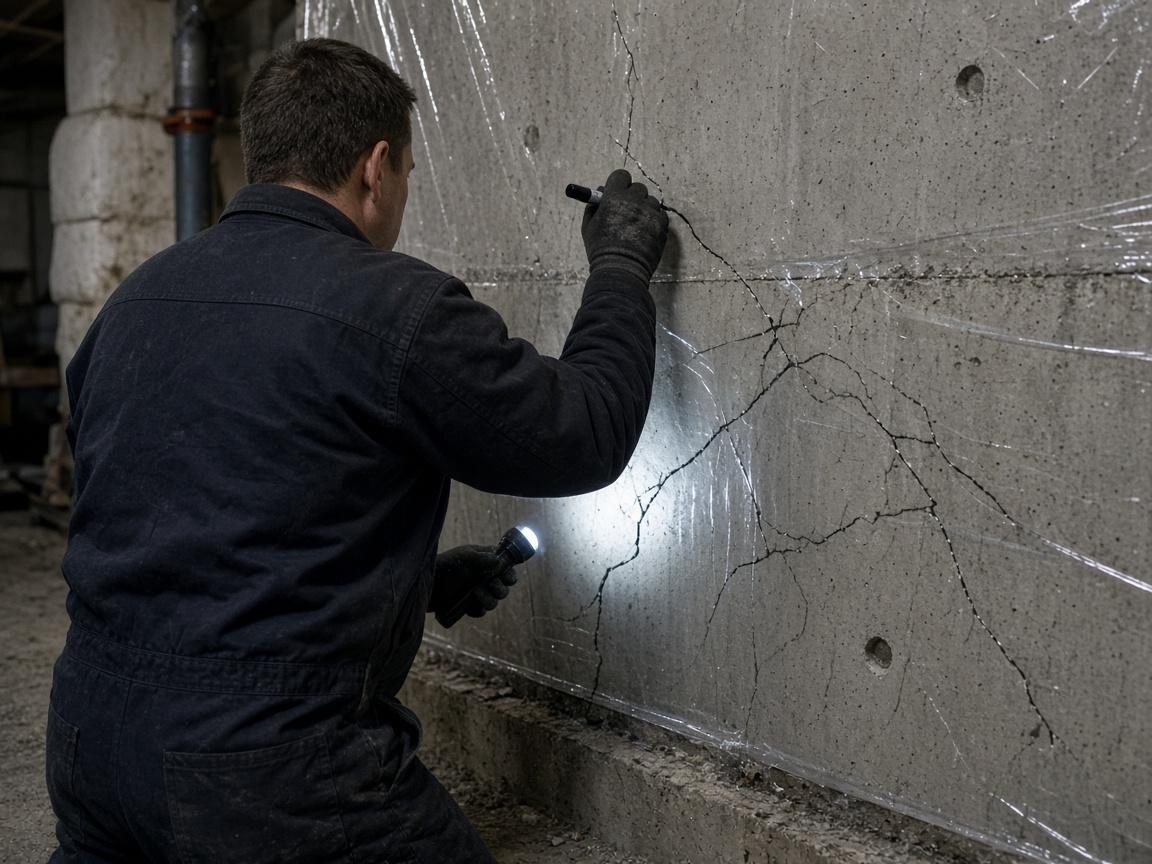
The critical measurement is the degree of bow. Industry guidelines from the Foundation Supportworks network categorize wall bow into: Stage 1 (less than 1 inch deflection — monitor with carbon fibre straps), Stage 2 (1–2 inch deflection — stabilize with wall anchors or carbon fibre), Stage 3 (2 or more inches — evaluate for wall replacement). We measure deflection with a calibrated straight-edge and document the reading.
Signs You May Need Bowed Walls
Why It Happens: Common Causes
Hydrostatic Soil Pressure
Saturated clay soils exert 2–4 times more pressure against foundation walls than dry soils. In Toronto's spring thaw, walls that have held for years can begin to bow within days as surrounding soil becomes fully saturated.
Freeze-Thaw Expansion
Ice formation in saturated soil behind the foundation wall exerts tremendous pressure — ice expands 9% by volume. Repeated cycling over decades increases the rate of inward deflection.
Tree Root Pressure
Large trees close to the foundation can exert direct pressure from root growth and also destabilize soil moisture conditions that protect the wall.
Deteriorated Mortar in Block Walls
Concrete block foundations lose resistance to lateral pressure as mortar joints erode. What was once a rigid wall system becomes a stack of individual blocks — far weaker under lateral load.
Water Main Breaks & Runoff
Municipal water main breaks or improperly directed runoff can saturate soil quickly, creating sudden spikes in lateral pressure that overwhelm walls with marginal capacity.
Repair Methods & Typical Costs
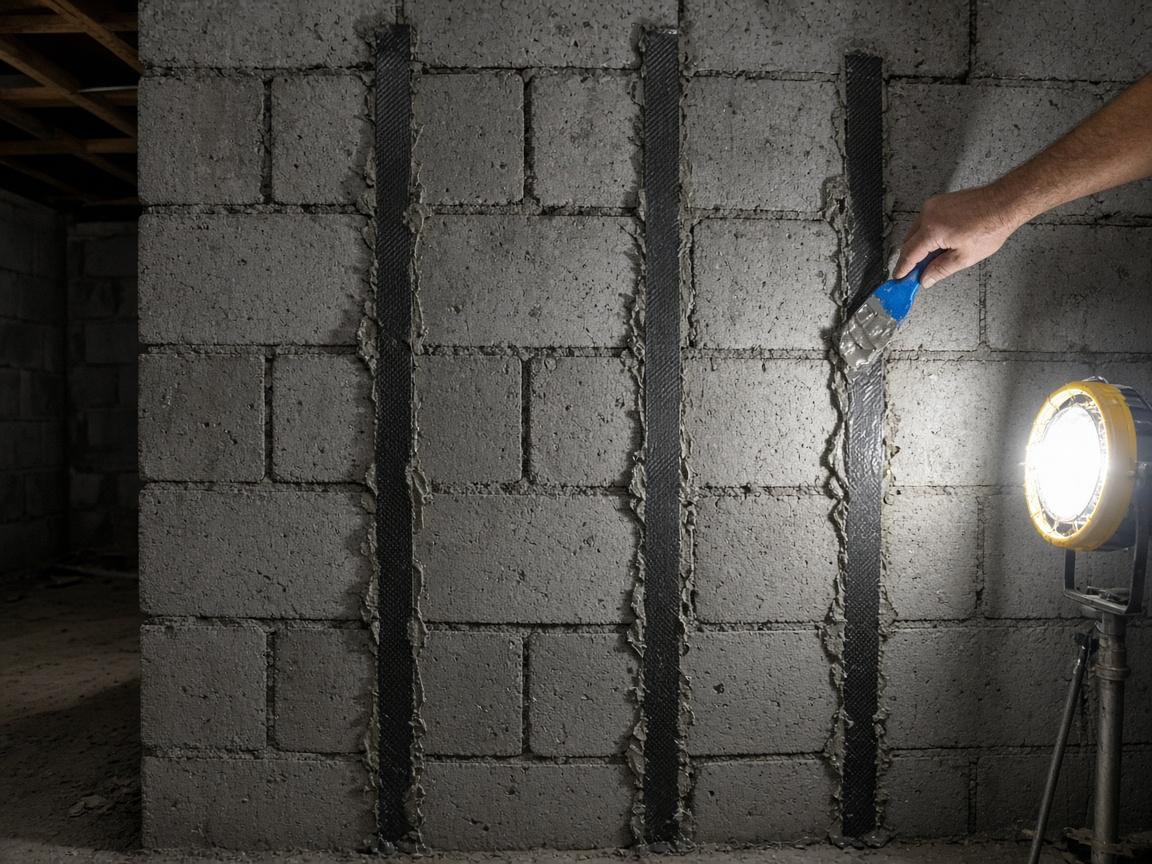
Carbon Fibre Strap Reinforcement
$400–$700 per strapHigh-modulus carbon fibre straps are epoxy-bonded vertically across the bowing section of the wall, attaching at the floor plate and rim joist. The straps have a tensile strength exceeding structural steel, prevent further inward movement, and can be installed in a single day with no wall excavation.
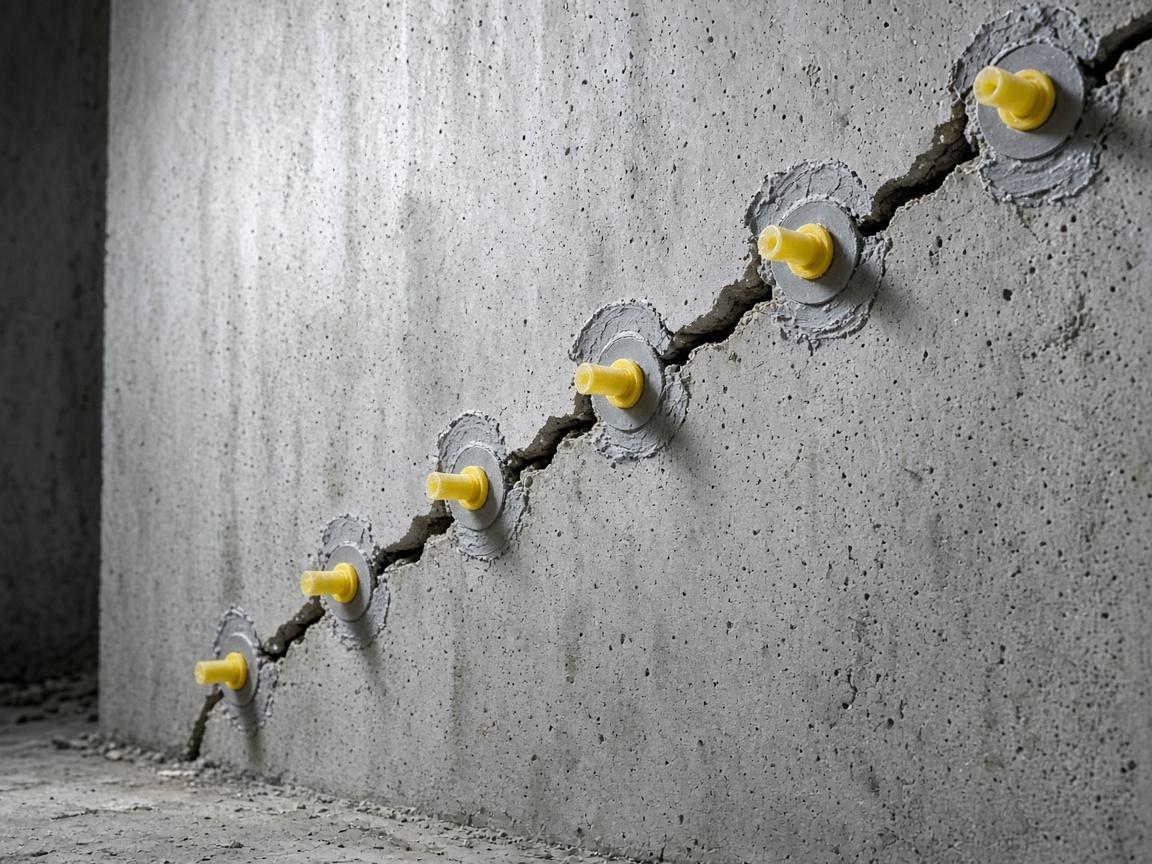
Wall Anchors (Plate Anchors)
$700–$1,200 per anchorA steel plate is installed against the interior wall face. A steel rod runs through the wall and connects to a buried anchor plate in the soil several feet from the foundation. Wall anchors can be gradually tightened over time to partially reverse bow — the only system that can restore wall alignment.
Steel I-Beam Reinforcement
$600–$900 per beamVertical steel I-beams are installed against the interior wall face at intervals, bearing against the floor slab and the main floor structure above. Extremely strong and effective for walls that have bowed significantly.
Excavation & Wall Replacement
$400–$600 per linear footFor walls that have bowed beyond practical repair tolerance (typically 3+ inches), full excavation, wall demolition, and new poured concrete or block wall construction is the only option. Expensive but permanent.
Cost ranges are estimates based on Toronto-area market conditions. Actual pricing depends on scope, access, and site conditions. A written quote follows assessment.
Questions About Bowed Walls in Toronto
Can bowing walls be reversed with wall anchors?
Yes — partially. Wall anchors can be tightened incrementally over one to two seasons, typically recovering 50–75% of the original wall position. Full reversal is rarely achievable without excavation. But stopping further movement and improving structural integrity are the primary goals.
How quickly does bowing progress?
Variable. Some walls bow slowly over 20 years. Others can advance significantly in a single wet season. A wall already at 1 inch of deflection during spring thaw should be assessed and stabilized before the next winter cycle.
Is bowing covered by my home insurance?
Almost never under standard Ontario homeowner's policies. Gradual deterioration is excluded. Sudden events like a flood or earthquake may be covered under specific riders, but typical seasonal soil pressure is considered maintenance-related.
Do I need to excavate to repair a bowing wall?
Not with carbon fibre straps or wall anchors. Both are interior-only systems that address bowing without digging outside. Excavation is reserved for cases where the wall needs replacement or where exterior pressure relief is required as part of the repair plan.
Get a Bowed Walls Assessment
Tell us what you're seeing and we'll schedule an on-site visit.
Request Assessment(647) 370-0382What's Included
Ready to Fix Your Bowed Walls Problem?
Toronto Foundation Repair Pros provides written foundation assessments across Toronto and the GTA. No pressure, no commission-based selling.