Poured Concrete Foundation Repair in Toronto & the GTA
Poured Concrete Has Unique Failure Modes — We Know Them All
What You Need to Know
Poured concrete foundation walls were standard in Toronto residential construction from the 1950s onward and remain the norm today. They're strong, relatively impermeable, and well-suited to the load transfer required in residential applications. But they're not maintenance-free — and they have specific failure modes that differ meaningfully from block, brick, or fieldstone foundations.
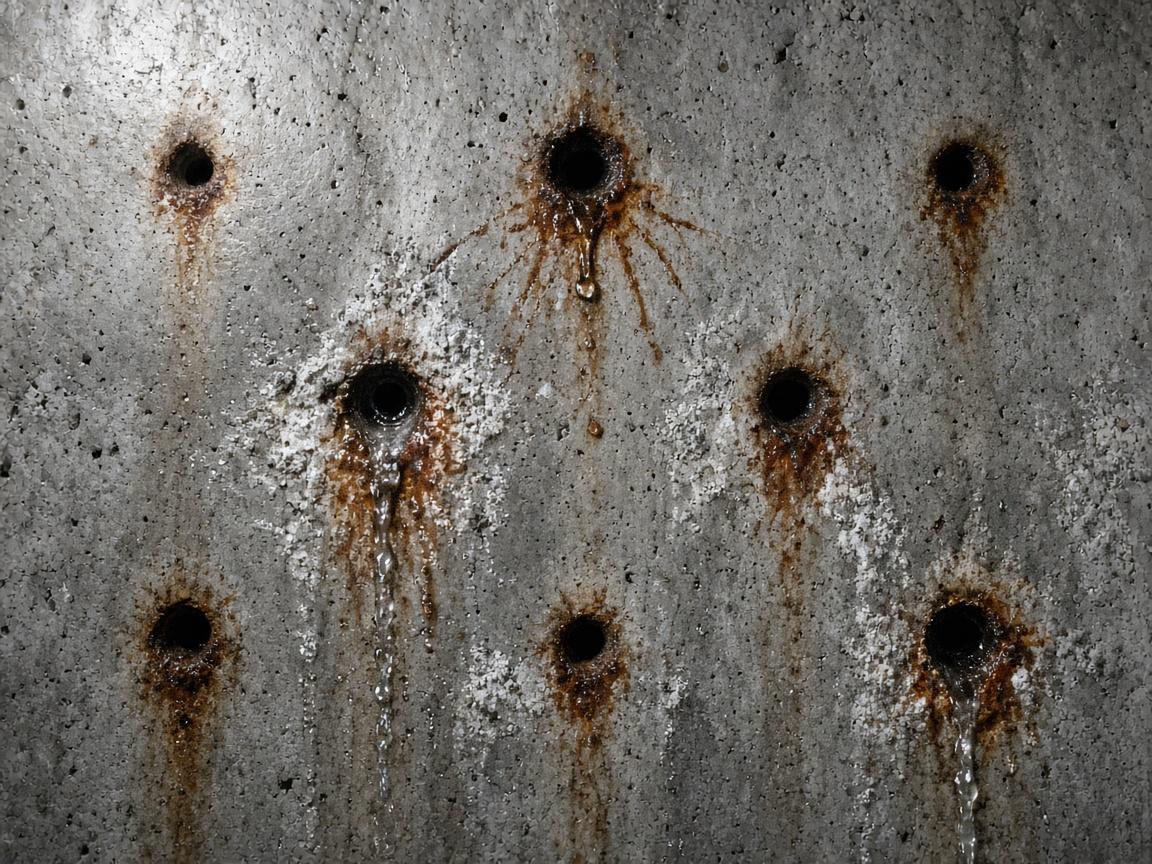
The most common poured concrete defects we repair in Toronto are: form tie rod holes (ubiquitous in all poured walls and a chronic water pathway), shrinkage cracks (nearly universal, range from benign to significant), cold joint seepage (where multiple pours meet), honeycombing (voids from inadequate vibration during placement), and horizontal or diagonal cracks from soil pressure or settlement.
Identifying which defect you have — and what caused it — is the difference between a targeted, cost-effective repair and an expensive generalist approach. We've been inside enough Toronto basements to read a poured concrete wall quickly and accurately. The repair menu is broad, and matching the right method to the defect is what we do.
Signs You May Need Concrete Repair
Why It Happens: Common Causes
Shrinkage During Cure
All concrete shrinks as the hydration reaction completes — typically 0.04–0.08% by volume. In a 30-foot wall, that's 0.14–0.28 inches of total shrinkage. Concentrated at the weakest points — window corners, wall intersections — this manifests as hairline cracks.
Form Tie Rod Placement
Every poured wall has form tie rods at regular intervals. When the rod is snapped off at each face, it leaves a small void from each face. Standard practice is to plug this with a dab of hydraulic cement — inadequate for long-term waterproofing.
Inadequate Concrete Vibration
Honeycombing (visible aggregate with no paste matrix) results from poor vibration during placement. These zones have significant porosity and limited structural strength — a direct water pathway and a structural weak zone.
Multiple-Pour Cold Joints
When a large foundation is poured in multiple lifts and the previous lift has partially set, the interface between pours has reduced adhesion — a cold joint. Under hydrostatic pressure, this interface opens and allows water transmission.
Repair Methods & Typical Costs
Structural Epoxy Injection
$400–$800 per crackFor dormant cracks in poured concrete, epoxy injection is the gold standard — it restores full structural integrity to the cracked section by bonding the two faces with a material stronger than the surrounding concrete.
Polyurethane Foam Injection
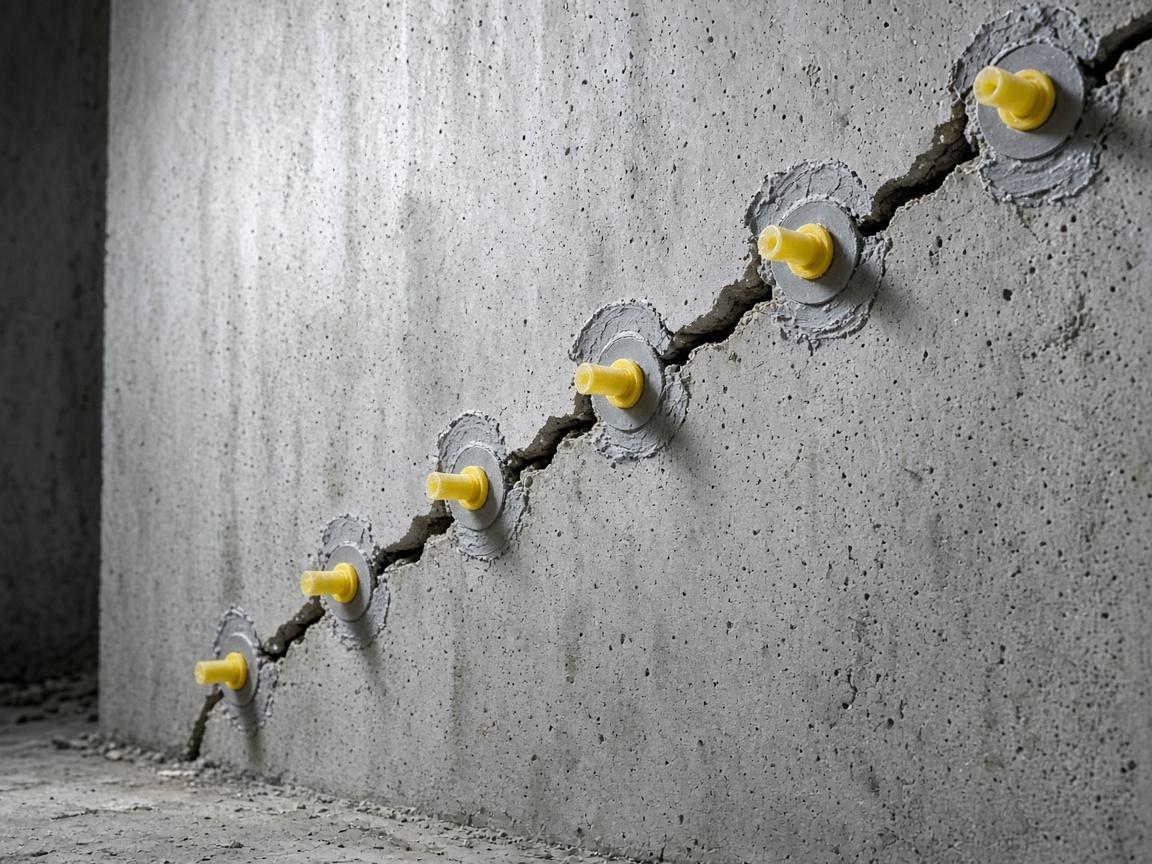
$350–$700 per crackFor active or wet cracks, polyurethane foam injection creates a flexible, waterproof seal. The foam expands on contact with moisture, filling the full crack depth and sealing against hydrostatic pressure.
Tie Rod Sealing
$200–$400 per tie rodEach tie rod void is cleaned to remove the failed surface plug, injection ports are installed, and the full-depth void is filled with polyurethane foam under pressure. Surface-finished with hydraulic cement.
Honeycombing Repair
$600–$2,000 per zoneThe honeycombed zone is chipped out to remove loose aggregate, the void is cleaned, and structural repair mortar or fine-aggregate concrete is packed into the cavity under pressure. For voids adjacent to the exterior face, crystalline waterproofing compound is incorporated.
Carbon Fibre Staple Stitching
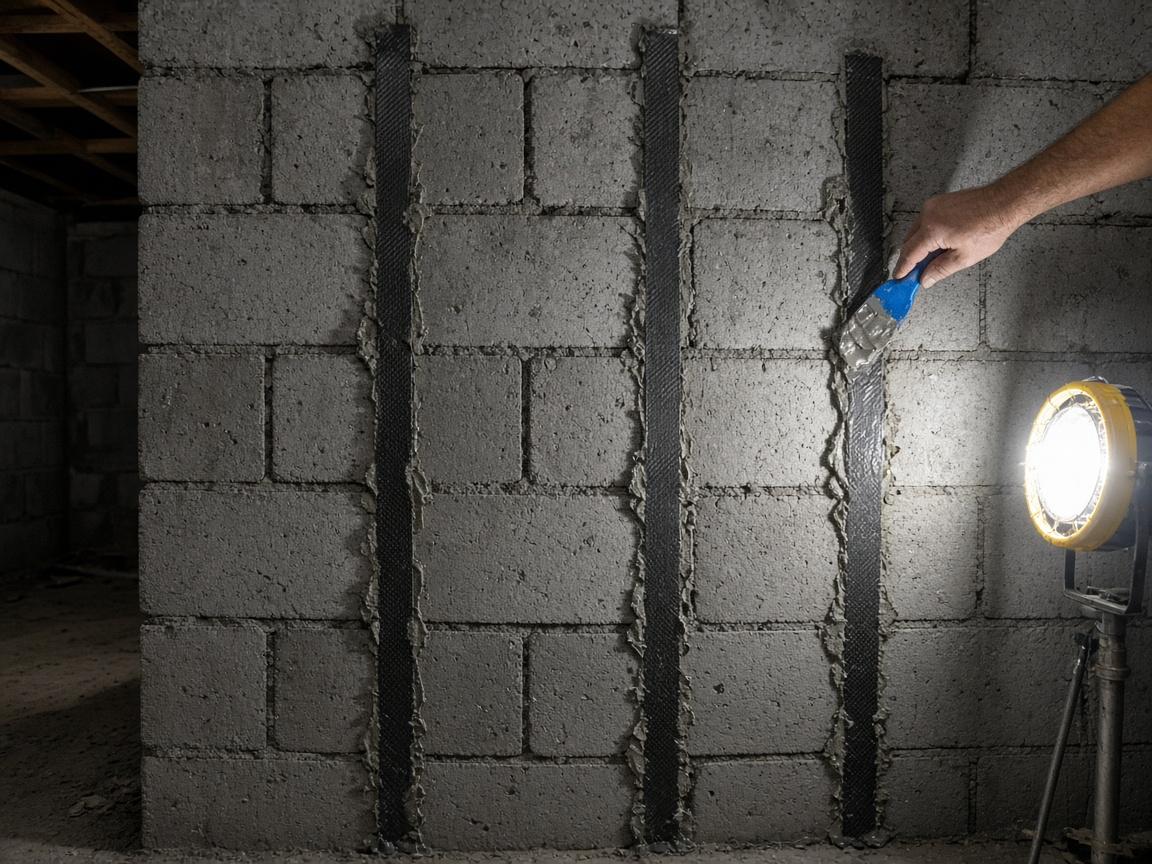
$150–$300 per stapleDiagonal or horizontal crack sections that are actively widening can be stitched with carbon fibre staples embedded across the crack in a structural epoxy bed — a modern alternative to steel rebar stitching that requires less concrete removal.
Interior Crystalline Coating
$10–$18 per sq ftA crystalline waterproofing compound applied to the full interior wall face reacts with concrete chemistry to grow crystals in capillary pores — permanently sealing diffuse seepage pathways throughout the wall.
Cost ranges are estimates based on Toronto-area market conditions. Actual pricing depends on scope, access, and site conditions. A written quote follows assessment.
Questions About Concrete Repair in Toronto
Are poured concrete foundations stronger than block?
In most respects, yes. Poured concrete has higher tensile and compressive strength than concrete masonry units, and has fewer mortar joints — which are the primary weakness in block walls. However, poured walls are more susceptible to shrinkage cracking, and the tie rod holes are a ubiquitous waterproofing weakness unique to poured construction.
Can honeycombing be repaired permanently, or does it mean the wall is compromised?
Limited honeycombing that doesn't extend through the full wall thickness can be repaired with structural mortar or pack-in concrete and crystalline waterproofing. Extensive or through-wall honeycombing is a more serious structural deficiency that may require engineering review and partial wall reconstruction in severe cases.
My poured wall has a horizontal crack at mid-height. How urgent is this?
Horizontal cracks in poured concrete walls are structural red flags. A mid-height horizontal crack is classically caused by the bending forces from lateral soil pressure — the wall is in the process of failing. We treat horizontal cracks as urgent regardless of apparent width and recommend getting an assessment within days, not weeks.
Get a Concrete Repair Assessment
Tell us what you're seeing and we'll schedule an on-site visit.
Request Assessment(647) 370-0382What's Included
Ready to Fix Your Concrete Repair Problem?
Toronto Foundation Repair Pros provides written foundation assessments across Toronto and the GTA. No pressure, no commission-based selling.